


- This event has passed.
Decolonial Bricolage: Global Far-right Future-making in Orbán’s Hungary
January 15 @ 4:00 pm – 5:30 pm
The Histories of RGSI (Race, Gender, Sexuality and Identity) research group will host a talk with Dr Annastiina Kallius (University of Helsinki, Institute for Advanced Study) on the rise of the far right in Hungary as well as across the globe. She will discuss how the concept of ‘decolonisation’ has been used to further anti-immigration legislation, the ideological complexities which make this kind of co-opting possible, and her ethnographic findings derived from gatherings of far-right politicians and pundits.
Decolonial Bricolage: Global Far-right Future-making in Orbán’s Hungary
Since the late 2010s, Budapest has evolved into a vibrant hub of knowledge production, where far-right thinkers from around the world exchange advice on statecraft. They gather in spaces ranging from chic, bookish cafés to festivals and lavish conferences. Differences in economic policy give way to a shared worldview that denounces secularization, excessive individualism, and the erosion of ethnic homogeneity. Increasingly, both Hungarian and foreign thinkers in this sphere criticize the coloniality of liberal knowledge production and explicitly adopt the language of decolonialism.What political and intellectual legacies sustain this far-right claim to decolonialism? Why is the growing global tension between universalism and particularism especially potent in the Eastern European context? I address these questions through an ethnographic examination of spaces of far-right future-making in Budapest. To understand how elements of decolonial thought travels from academic environments to these milieus, I employ Lévi-Strauss’s concept ofbricolageto show how the far-right version of decolonialism recycles fragments of decolonial thought that reject liberal hegemony, but ultimately constructs something different. This bricolage nature of far-right decolonialism becomes evident through its contrast with its analog: rather than fostering epistemic plurality, it simply reverses the canon of knowledge production.
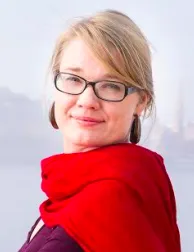
Annastiina Kallius is an anthropologist and researcher at the Helsinki Collegium for Advanced Studies. Her work is ethnographically grounded in Hungary and explores themes of illiberalism, epistemology, and migration. Her doctoral dissertation examined what happens when liberalism retreats to a marginal position both in political and epistemic terms. Her current postdoctoral project investigates the intellectual history and international networks of illiberal political philosophy.