RGSI in the Archives—Annual Research Symposium 2026
Reflections by Jonathan Spangler
On Thursday 25 June, members of the research group Histories of RGSI (Race, Gender, Sexuality and Identity) met in the cool of the Grosvenor East Building (it was one of the hottest June days on UK records) to share their recent research and in particular to discuss approaches to and experiences of working in the archives. ‘RGSI in the Archives’ featured twelve short papers from our members across the disciplines of history, politics, philosophy, and sociology, and ranging from doctoral students to seasoned professors. Some common threads included the challenges and pleasures of identifying which archives to use and what might be lurking unknown within them. One of the recurring themes was the importance of serendipity: what records were collected due to archivists’ particular interests or mandates? Which survived fires or revolutions by pure chance? How do elements of gender or race affect which records are kept and which are destroyed? Another theme was the importance of representativeness of the archives: a large proportion of documents in archives pertain to lawsuits, persecutions, or disease, leaving many peoples’ lives—unmolested, thriving—undocumented and thus invisible.
In the first of four sessions, Rob Jackson discussed recent debates about how to theorise race and social mobility in the context of Stuart Hall’s work on the philosopher Antonio Gramsci. He asked pertinent questions of this body of work, notably is there a ‘structure’ of race? And is it possible to measure how ‘common sense’ changes in society over time? Haseeb Khan then discussed British Muslim Identity in the archives, in particular noting the difficulty of knowing what would be in an archive in order to best target it for research, noting the lack of detail in some of the collections pertaining to non-white sailors and merchants. Shirin Hirsch asked similar questions about photography collections pertaining to the 1926 General Strike and how research is affected by politically motivated reporting or collecting, or by incorrect attributions by previous collectors/curators.
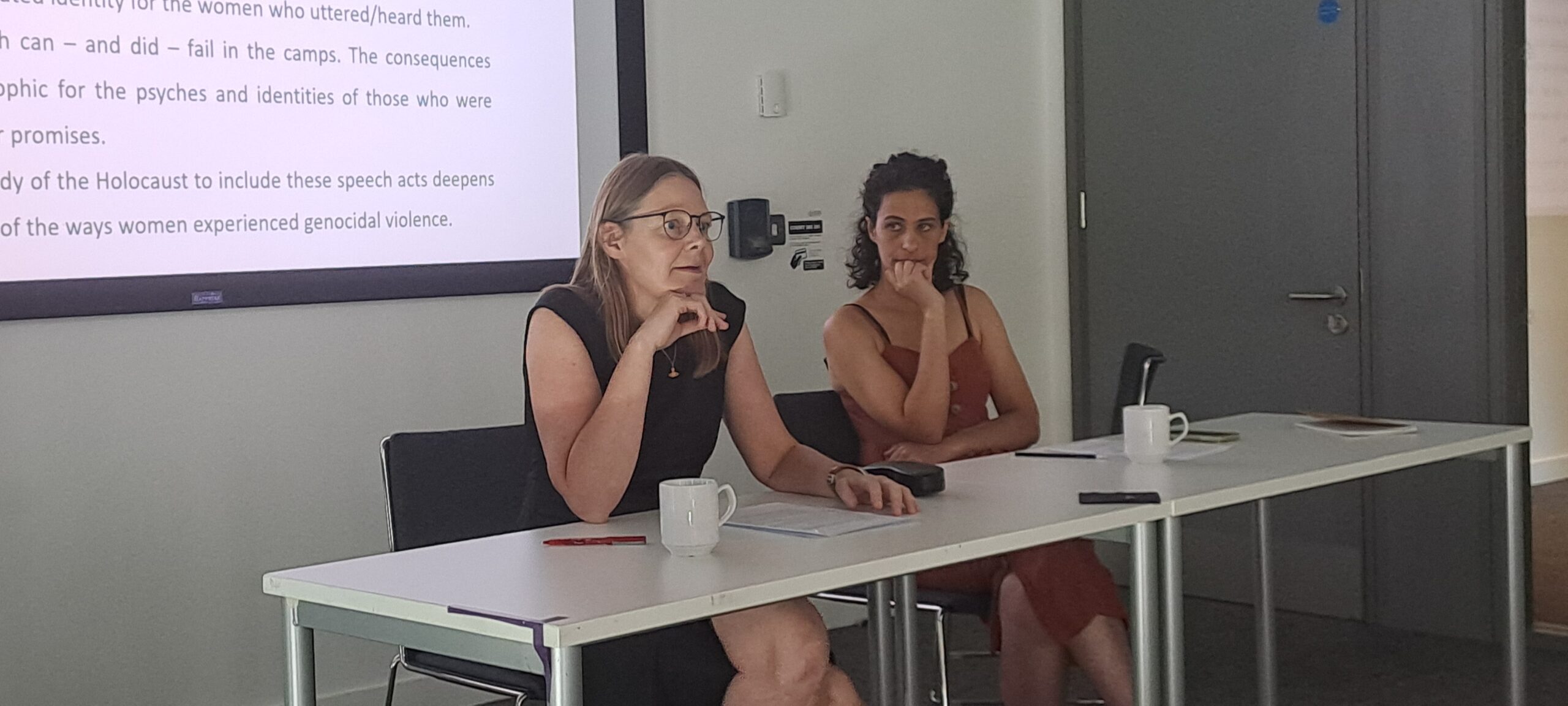
We next heard three fascinating papers linked by the theme ‘Care, Mental Health, and the Self’. Rob Ellis presented intriguing images and records pertaining to refugees who came to London during the First World War (primarily Belgians) and who were categorised as suffering from mental illness. Extant records are mostly positive, stressing the hospitality of the British, which may not have fully reflected the war trauma of the civilian population of the time. Rosie Ramsden then presented a fascinating but troubling case study emphasising kinship and ‘constructed sisterhood’ in German Concentration Camps in the Holocaust. In the diaries and letters that have survived, she demonstrated uses of ‘performative speech’ (such as promises or pledges) women used to support each other in the worst of situations. Finally, Anna Bergqvist presented her recent work on using philosophy to inform clinical approaches to ethics and how ‘narrative particularism’ is used by patients to express their needs, rightly or wrongly, and how professionals need to be able to engage with these patient definitions of selfhood.
After a tasty catered lunch and group connections strengthened through conversation, panel three focused on ‘Gender, the Body, and Subjectivity’. Anneke Meyer, who joins us from the School of Sociology and Criminology, looked at the culture wars of the last decade since the arrival of the #MeToo movement on social media. The overarching message was that the meanings and motivations of #MeToo are now much more complex, driven by divisions in politics, largely depending on news coverage (split left and right). Concerns were raised about how this change has trivialised the issues about sexual violence or buried them in the face of ordinary people’s interests (or lack of interests) in a ‘post-truth’ world. Keith Crome then took the floor to present recent work he has done on the philosophy of waste. Waste is connected to people who waste, but also to places (where do we put our poo?). Does a waste management project make humans distinct from animals, or is it just another way to mark our territory? Craig Griffiths then closed this session with a look at work he is doing on the entangled histories of queer and human rights activism, focusing on the Austrian League for Human Rights. He analysed a letter sent by a British gay men to the Austrian League, in which the writer criticised the European Convention of Human Rights (which had not prevented his being sectioned under the UK mental health act). All three of these papers connected at the point where political languages intersects with society and culture, and basic rights of humanity.
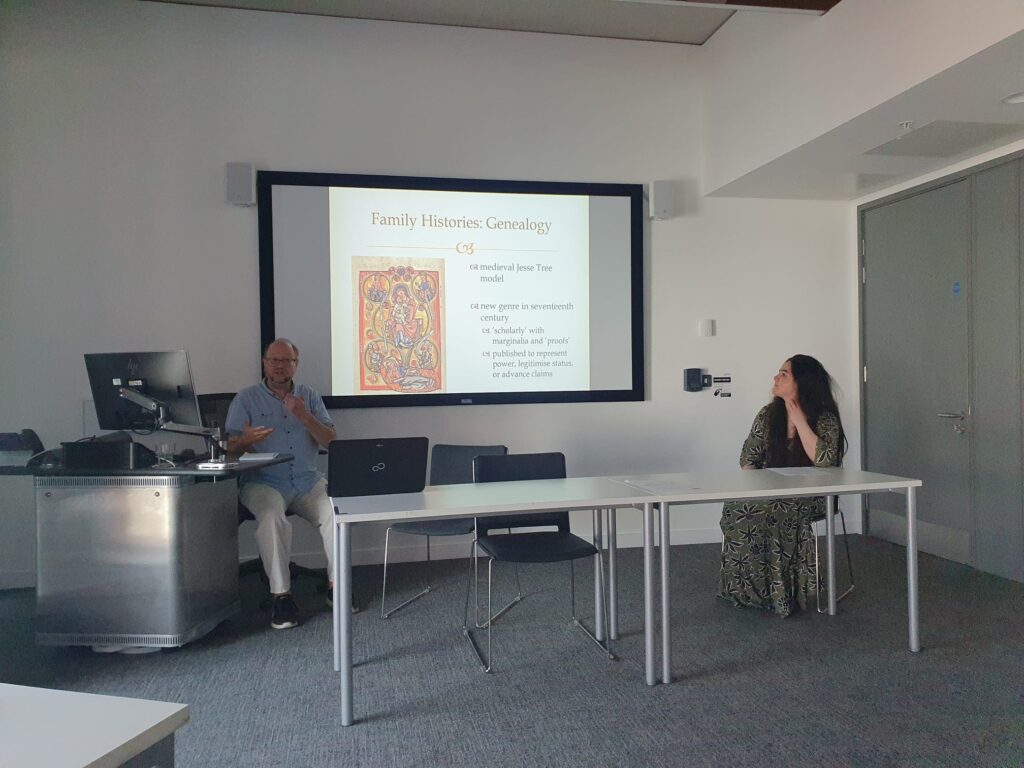
The final session of the day was devoted specifically to dynastic identities, bringing together three research studies about early modern elites using whatever methods they had at their disposal to define themselves and assert their place in society. Nathan Atherton presented a recently published study about a widow trying to maintain her position as mistress of an estate in Lancashire (Ruford Old Hall) in the face of her step-children. As noted above, much of this research is informed by details recorded in the seemingly endless litigation, but is also restricted by things that are not recorded, including the fates of some of the litigants themselves. Jonathan Spangler pulled together two recent presentations to consider what archives reveal about unmarried elite women in France in the seventeenth century: he first looked at how printed genealogies of the period often omit such women, as ‘dynastically insignificant’, but how archival materials (lawsuits, estate records) reveal in fact the opposite, that such unmarried women were often crucial in terms of protecting assets against creditors or socialising the next generations of the family in terms of its identity. Harry McKenzie-Rowan finished off this trio with a look at his new doctoral project which focuses on a ‘forgotten prince’, Frederick, Prince of Wales, and how archival materials will (hopefully) help see how he self-fashioned in order to distinguish himself politically from his father, and in the face of a more popular brother’s successful use of military iconography.
Each of the panels was followed by interesting questions and discussion from the group. For example, following Keith’s paper, the question was raised over whether waste had to always be waste (nothing), or could be transformed into something (like Dutch landfills); while Shirin Hirsch and Haseeb Khan were both asked to discuss more the impact of race or class on the collecting of photos or other records relevant to their projects. Overall, we left feeling a stronger sense of community and shared interests across the disciplines and research areas represented in RGSI.